
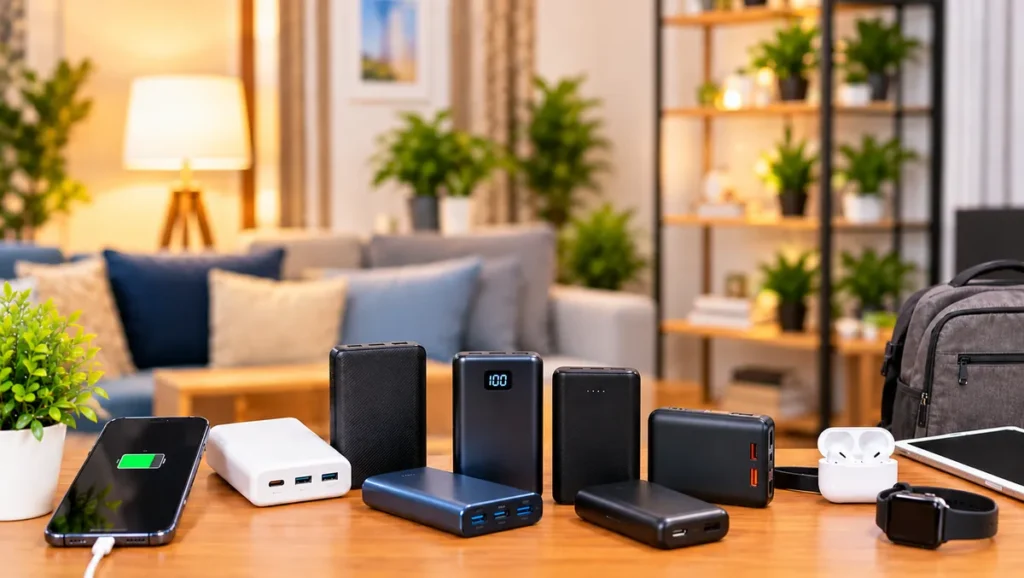
A smartphone has become an essential part of everyday life. Whether you use your phone for work, navigation, entertainment, photography or communication, running out of battery at the wrong time can be frustrating.
A power bank can solve this problem by providing portable backup power when you are away from a wall charger. However, with so many options available, choosing the best power bank for your phone can be confusing.
Power banks come in different capacities, sizes, charging speeds, port configurations and price ranges. The most expensive model is not necessarily the right choice for everyone.
In this guide, we explain the important things you should check before buying a power bank so you can choose one that matches your smartphone and daily requirements.
Also Read: 10 Essential Electronics Accessories Every Home Should Have
What Is a Power Bank?
A power bank is a portable battery that stores electrical energy and allows you to charge electronic devices when a wall outlet is not available.
Most modern power banks can charge smartphones through USB ports, while some models also support USB-C charging, fast charging and charging multiple devices simultaneously.
They can be particularly useful during:
- Travel
- Long journeys
- Outdoor activities
- Office work
- College or university
- Power cuts
- Photography trips
- Emergency situations
The Best Power Bank for Your Phone should provide enough capacity for your needs without being unnecessarily large or heavy.
1. Choose the Right Power Bank Capacity
One of the first things to consider when buying a power bank is its capacity.
Capacity is generally advertised in mAh (milliampere-hours).
Common capacities include:
- 5,000mAh
- 10,000mAh
- 20,000mAh
- 25,000mAh and above
5,000mAh Power Bank
A 5,000mAh model is usually compact and easy to carry. It can be suitable for users who want emergency backup power without carrying a larger battery.
10,000mAh Power Bank
For many smartphone users, 10,000mAh offers a practical balance between portability and capacity.
It is a good option for everyday use, commuting and short trips.
20,000mAh Power Bank
If you frequently travel or need to charge your phone several times, a 20,000mAh power bank can be more suitable.
However, larger capacity usually means a heavier and larger device.
Which Capacity Should You Buy?
Your choice should depend on your phone’s battery capacity, how frequently you need to recharge it and how much weight you are comfortable carrying.
For everyday users, 10,000mAh is often a convenient starting point, while frequent travellers may prefer 20,000mAh.
2. Check the Charging Speed
Capacity isn’t the only important specification.
Charging speed can make a major difference in daily use.
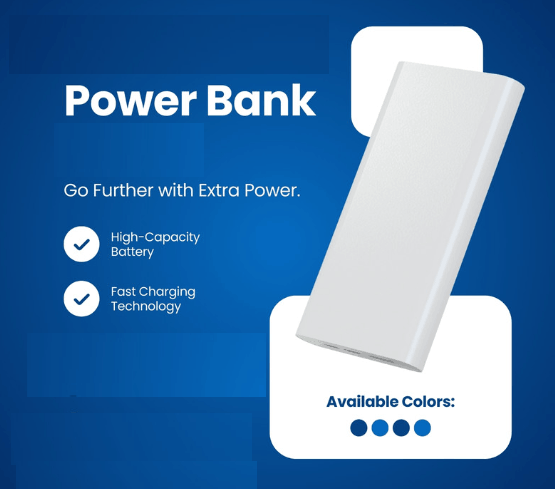
Look for Best Power Bank for Your Phone that clearly mention their supported output power, such as:
- 10W
- 18W
- 20W
- 30W
- 45W or higher
However, buying a high-output power bank does not automatically mean your phone will charge at that speed.
Your smartphone must also support the relevant charging technology and power level.
USB-C Power Delivery
USB-C Power Delivery, commonly called USB PD, is an important feature to look for when choosing a modern power bank.
If your smartphone supports USB PD, a compatible power bank and cable may provide faster charging than a basic USB charger.
Always check your phone manufacturer’s charging specifications before buying.
3. Look at the Available Ports
Before buying a power bank, check which ports it provides.
A modern model may include:
- USB-C input
- USB-C output
- USB-A output
- Multiple USB outputs
A USB-C port is particularly useful because many modern smartphones and electronic devices use USB-C connections.
If you regularly charge multiple devices, choosing a model with multiple outputs can also be convenient.
4. Don’t Ignore Safety Features
Safety should be one of the most important considerations when purchasing a battery-powered device.
A good power bank should have appropriate protection against problems such as:
- Overcharging
- Overcurrent
- Short circuits
- Overheating
- Excessive voltage
Always purchase from a reputable manufacturer and check the product specifications and safety information before buying.
Avoid extremely cheap products with unclear specifications or no identifiable manufacturer information.
5. Check the Size and Weight
A 20,000mAh power bank may offer significantly more capacity than a compact 5,000mAh model, but it can also take up more space in your bag.
Think about how you will use it.
If you want something for everyday carrying, a smaller model may be more convenient.
If you travel frequently and need more backup power, additional capacity may be worth the extra weight.
Portability vs capacity is one of the most important trade-offs when choosing the best power bank for your phone.
6. Check the Cable Compatibility
A power bank is only useful if you have the right cable for your device.
Before buying, check whether your smartphone uses:
- USB-C
- Lightning
- Another connector
It is also worth checking whether the power bank includes a charging cable.
For fast charging, the cable itself can also matter. A suitable power bank, phone and cable should all support the charging standard you want to use.
7. Consider Pass-Through Charging Carefully
Some power banks advertise pass-through charging, which allows the power bank to receive power while also charging another device.
This may sound convenient, but it isn’t necessarily a feature everyone needs.
If you frequently charge your power bank and phone at the same time, it can be useful. Otherwise, it may not be an important buying factor.
8. Should You Buy a Wireless Power Bank?
Wireless charging power banks can be convenient because they reduce the need for a cable.
However, wired charging is often preferable when you want maximum efficiency and faster charging, depending on the phone and power bank.
A wireless model can make sense if:
- Your phone supports wireless charging
- You prefer cable-free charging
- Convenience is more important than maximum charging speed
Before buying, check whether your particular phone supports the wireless charging standard used by the power bank.
9. Consider the Number of Devices You Need to Charge
Think beyond your smartphone.
Do you also carry:
- Wireless earbuds?
- Smartwatch?
- Tablet?
- Camera?
- Bluetooth speaker?
If you regularly charge multiple devices, look for a power bank with suitable output ports and enough capacity.
For example, a traveller may prefer a higher-capacity model with multiple outputs, while someone who only needs emergency smartphone charging may prefer a compact model.
10. Don’t Buy Only on the Basis of mAh
One of the most common mistakes is choosing a power bank simply because it has a large mAh number.
A higher capacity doesn’t automatically mean a better product.
You should compare:
Capacity + charging speed + ports + safety + size + reliability + warranty
A well-designed 10,000mAh power bank from a reputable manufacturer can be a better choice for everyday use than a much larger but poorly specified product.
How Many Times Can a Power Bank Charge Your Phone?
The actual number of charges depends on several factors.
For example, a 10,000mAh power bank will not normally deliver exactly 10,000mAh to your phone because energy is lost during voltage conversion and charging.
Actual Best Power Bank for Your Phone performance can vary depending on:
- Phone battery capacity
- Power bank efficiency
- Charging protocol
- Cable
- Temperature
- Phone usage while charging
Therefore, treat advertised capacity as a useful specification rather than an exact number of full phone charges.
Best Power Bank for Travel
If you’re buying a power bank mainly for travel, consider these features:
- 10,000mAh or 20,000mAh capacity
- USB-C input/output
- Fast charging support
- Multiple ports if needed
- Compact design
- Reliable safety protections
- Clear manufacturer information
Before flying, also check your airline’s current rules regarding carrying lithium-ion power banks in cabin baggage. Airline and airport requirements can change.
Best Power Bank for Everyday Use
For everyday use, you don’t necessarily need the largest model.
A compact 10,000mAh power bank with USB-C and suitable fast-charging support can be a practical choice for many smartphone users.
If you only need emergency backup, a smaller model may be even more convenient.
Power Bank Buying Checklist
Before purchasing, quickly check these points:
| Feature | What to Look For |
|---|---|
| Capacity | 5,000–20,000mAh depending on your needs |
| Output | Suitable for your phone’s charging requirements |
| Port | Prefer USB-C for modern devices |
| Fast Charging | Check compatibility with your phone |
| Safety | Overcharge, overcurrent and short-circuit protection |
| Size | Choose according to portability needs |
| Brand | Prefer reputable manufacturers |
| Warranty | Check warranty and support |
| Cable | Make sure it is compatible |
| Price | Compare specifications, not just price |
Final Verdict
Choosing the best power bank for your phone doesn’t have to be complicated.
Start by checking your smartphone’s battery capacity and supported charging technology. Then choose an appropriate power-bank capacity, preferably with USB-C connectivity and suitable charging output.
For everyday smartphone users, a compact 10,000mAh model can be a practical starting point. Frequent travellers may prefer a higher-capacity option.
Most importantly, don’t choose a power bank based only on its mAh rating. Charging speed, safety, compatibility, portability and manufacturer reliability are equally important.
Frequently Asked Questions
Is 10,000mAh enough for a phone?
For many smartphone users, 10,000mAh provides useful backup power. The actual number of charges depends on the phone’s battery and charging efficiency.
Is a higher mAh power bank always better?
No. Higher capacity generally provides more stored energy, but it can also increase the size and weight of the power bank.
Is USB-C better for a power bank?
USB-C is a very useful option for modern devices because it can support both charging input and output, depending on the power bank.
Can a power bank damage a phone?
A reputable, compatible power bank with appropriate safety protections should be designed for safe charging. Avoid unknown products with questionable specifications.
Should I buy a fast-charging power bank?
If your phone supports fast charging, a compatible fast-charging power bank can be a useful upgrade.
TruCoreHub Affiliate Disclosure
This article is intended to help readers make informed purchasing decisions. TruCoreHub may earn a commission when you purchase certain products through qualifying affiliate links, at no additional cost to you.