
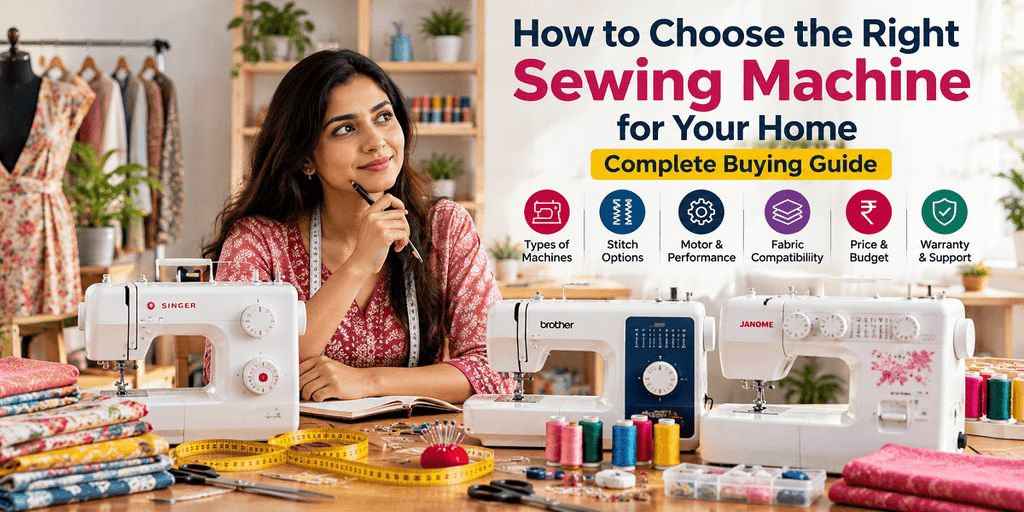
Choosing the right sewing machine for your home can make sewing easier, more comfortable and more enjoyable. The best choice depends on what you want to sew, how often you will use the machine, the fabrics you work with and your budget.
In this guide, we explain how to choose the right sewing machine for home use, including machine type, stitches, motor performance, threading, fabric compatibility, warranty, service and the features beginners should compare.
Affiliate Disclosure: TruCoreHub may earn a small commission when you purchase products through affiliate links on this website, at no additional cost to you. Our recommendations are based on usefulness, features and suitability for different users.
Quick Answer: How to Choose the Right Sewing Machine
Start by deciding what you will sew. For basic alterations, clothing repairs and everyday home sewing, a simple mechanical machine can be a practical choice. If you want more automated controls, decorative stitches and additional functions, a computerized machine may be worth considering.
Before buying, compare stitch options, motor performance, threading and bobbin system, fabric compatibility, build quality, accessories, warranty and after-sales service. Do not choose a machine only because it has the lowest price or the highest number of stitches.
What Should You Check Before Buying?
- Decide what type of sewing you will do most often.
- Choose mechanical or computerized operation according to your experience and needs.
- Check basic stitches such as straight and zigzag.
- Look at motor performance and speed control.
- Check threading and bobbin loading.
- Confirm the machine is suitable for your fabrics.
- Compare included presser feet and accessories.
- Check warranty, service centres and spare-parts availability.
- Compare the current price, seller information and recent customer reviews.
1. Identify Your Sewing Needs
Think about whether you need a machine for basic repairs, regular clothing work, decorative stitching or small home business use.
2. Compare Important Features
- Stitch options
- Motor performance
- Threading and bobbin system
- Presser feet and included accessories
- Machine size and portability
3. Check Support
Before buying, check warranty, service availability, spare parts and seller reputation. If you are wondering how to choose the right sewing machine, start by identifying the type of sewing you plan to do at home.
If you are wondering how to choose the right sewing machine, start by understanding your sewing needs, budget and the type of fabrics you plan to use.
4. Check Motor Performance and Sewing Speed
Motor performance matters when you use a sewing machine regularly or work with several layers of fabric. Beginners should also consider speed control because a very fast machine is not always easier to learn on.
Look for smooth operation, consistent stitching, appropriate sewing speed, good start-and-stop control and reasonable vibration during normal use.
5. Check Threading and the Bobbin System
Easy threading can make a big difference when you are learning. Before buying, check whether the machine has clear threading instructions, easy bobbin insertion and removal, simple bobbin winding and good access to the needle area.
Also check whether compatible bobbins, needles and other consumables are easily available.
6. Consider the Fabrics You Will Sew
If you mainly sew cotton, thin fabrics and normal dress materials, a standard home sewing machine may be sufficient. If you expect to work with denim, multiple layers or heavier materials, pay closer attention to the manufacturer’s specifications, machine construction and motor performance.
Important: Do not assume that every household sewing machine is suitable for heavy-duty fabrics. Always check the manufacturer’s recommended fabric use before purchasing.
7. Compare Build Quality and Stability
A stable machine can make learning and everyday sewing more comfortable. Consider the overall construction, machine weight, base stability, quality of controls and the quality of the included accessories.
If you need to move the machine frequently, also consider its size and weight for your available workspace. Understanding your fabric requirements is another important part of how to choose the right sewing machine.
Knowing how to choose the right sewing machine for your specific needs can help you avoid paying for features you may never use.
8. Check Presser Feet and Included Accessories
Presser feet can add useful functionality for different sewing tasks. Check exactly what comes in the box because two machines at a similar price may include different accessories.
9. Warranty and After-Sales Service
Warranty and service support are important when buying your first sewing machine. Check the warranty period and terms, service-centre availability, spare parts, replacement accessories and customer support.
A machine with accessible service support can be a better long-term choice than a cheaper model that is difficult to repair.
10. Set a Realistic Budget
There is no single perfect price for everyone. Your budget should depend on how often you will use the machine, what you plan to sew, the features you need and whether sewing is a hobby or a small business activity.
Instead of asking only, “Which is the cheapest sewing machine?”, ask, “Which machine gives me the features and reliability I need at a reasonable price?”
Mechanical vs Computerized: Which Is Better?
| Feature | Mechanical | Computerized |
|---|---|---|
| Controls | Manual knobs or dials | Electronic or digital controls |
| Learning | Generally straightforward | May require more learning |
| Stitch options | Basic to moderate | Often more extensive |
| Everyday alterations | Excellent | Excellent |
| Decorative sewing | Limited to moderate | Often better suited |
| Beginner suitability | Very good | Good |
General recommendation: For someone buying a first machine mainly for basic home sewing and alterations, a simple mechanical machine can be a practical starting point. Choose computerized operation if you specifically want its additional functions. This simple checklist can help beginners understand how to choose the right sewing machine without overspending.
Common Mistakes Beginners Should Avoid
- Buying only because of a low price: Compare features, quality and support as well.
- Choosing too many features: More stitches do not automatically mean a better machine.
- Ignoring service availability: Check whether support and spare parts are accessible in your area.
- Not checking fabric compatibility: Follow the manufacturer’s specifications for heavier materials.
- Ignoring customer reviews: Look for patterns across recent reviews rather than relying on one opinion.
How to Choose a Sewing Machine Online
- Decide your budget.
- List the fabrics and projects you expect to work on.
- Choose mechanical or computerized operation.
- Compare stitches, motor performance, threading and accessories.
- Check warranty and service support.
- Read recent customer reviews.
- Compare prices from reliable sellers.
- Check final price and delivery details before ordering.
Beginner Sewing Machine Buying Checklist
- ☐ Suitable for your intended fabrics
- ☐ Easy threading
- ☐ Easy bobbin system
- ☐ Straight and zigzag stitches
- ☐ Reverse stitching
- ☐ Suitable motor performance
- ☐ Stable construction
- ☐ Useful presser feet and accessories
- ☐ Warranty and service availability
- ☐ Spare parts availability
- ☐ Current price and seller information
- ☐ Recent customer reviews
Frequently Asked Questions
Which sewing machine is best for home use?
The best sewing machine for home use depends on your projects, fabrics, experience and budget. For basic alterations and everyday sewing, a simple machine with reliable stitching and easy controls can be enough.
When learning how to choose the right sewing machine, also consider after-sales service, spare parts and warranty support.
Is a mechanical sewing machine good for beginners?
Yes. A mechanical machine can be a practical starting point for beginners who want simple controls and basic sewing functions.
Should beginners buy a computerized sewing machine?
A computerized machine can be useful if you want more automated functions and additional stitch options. However, beginners who only need basic sewing may not need all those features.
How many stitches does a beginner need?
There is no fixed number. Straight and zigzag stitches are more important for many everyday sewing tasks than having a large number of decorative patterns.
What should I check before buying a sewing machine online?
Check specifications, fabric compatibility, warranty, service availability, accessories, seller information, current price and recent customer reviews. Before making a final purchase, compare these factors to confidently choose the right sewing machine for your home.
Final Verdict
Learning how to choose the right sewing machine becomes much easier when you start with your actual sewing needs. Do not focus only on price, brand name or the number of stitches.
For a first machine, prioritize easy operation, reliable stitching, suitable motor performance, useful features, stable construction, warranty and accessible service support.
Once you know what you want to sew, compare suitable models using the checklist above and choose the machine that gives you the best overall value.
Related guide: Best Sewing Machines for Beginners in India – Buying Guide